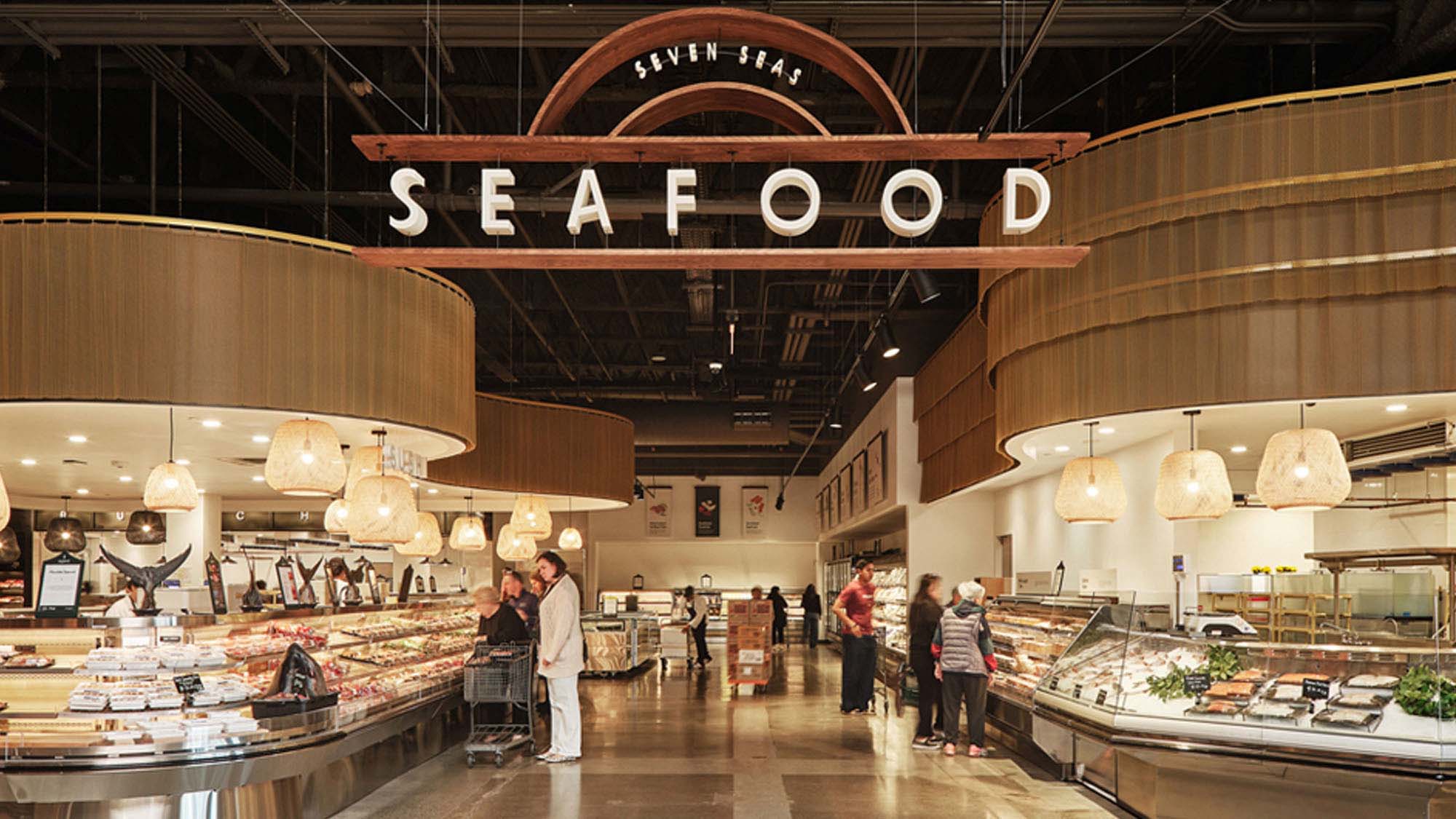
Not long ago, Asian supermarkets were primarily neighborhood institutions serving immigrant families and communities looking for familiar ingredients, traditional foods, and a connection to home. Many operated in modest shopping centers, carrying products rarely found in mainstream American grocery stores.
Today, that picture looks remarkably different.
Across North America, Asian supermarket chains are opening ambitious new locations, attracting enormous crowds, and transforming former big-box stores into bustling culinary destinations. H Mart, 99 Ranch Market, T&T Supermarket, Jalachi, and Patel Brothers are expanding their reach, while newer regional concepts are introducing shoppers to increasingly specialized Asian food experiences.
In March 2026, approximately 10,000 people visited the opening of H Mart in Dublin, California, according to the company. In December 2024, customers lined up before dawn for the American debut of Canada's T&T Supermarket in Bellevue, Washington—a 76,000-square-foot destination featuring fresh groceries, prepared foods, and an extensive Asian bakery.
These aren't simply grocery store openings. They're becoming cultural events.
So what's driving this extraordinary growth? And why are Asian supermarkets resonating with an audience that extends far beyond the communities they originally served?
A demographic shift decades in the making
The most obvious explanation begins with North America's changing population.
Asian communities have grown substantially in cities and suburbs throughout the United States and Canada, creating greater demand for culturally specific products and shopping experiences.
According to the U.S. Census Bureau, the Asian population reached approximately 20.7 million in 2023, increasing 2.3% from the previous year. California, New York, and Texas had the largest Asian populations, while metropolitan areas such as Dallas and Austin experienced significant growth.
As these populations have grown and become more geographically dispersed, Asian grocers have followed.
But something important has changed. What was once a specialized retail category serving predominantly immigrant communities is increasingly attracting second- and third-generation Asian Americans, multicultural households, young professionals, and consumers of virtually every background.
The distinction is significant.
Asian supermarkets are no longer expanding simply because there are more Asian customers. They're growing because the market for Asian food has expanded well beyond Asian communities.
Asian culture has become mainstream culture
Over the past two decades, Asian cultural influences have moved from niche interests into the center of global popular culture.
Korean entertainment, Japanese anime, Taiwanese bubble tea, Chinese hot pot, Indian cuisine, and Southeast Asian street food have introduced millions of North American consumers to flavors, traditions, and experiences that previous generations may never have encountered.
K-pop has helped popularize Korean food culture. Anime has inspired interest in Japanese snacks and convenience-store foods. Restaurants serving ramen, pho, dim sum, Korean barbecue, and regional Indian dishes have made once-unfamiliar ingredients increasingly recognizable.
Social media has accelerated that discovery.
A TikTok video featuring Korean instant noodles can introduce millions of viewers to a particular product almost overnight. YouTube creators routinely explore Japanese snacks, Chinese cooking techniques, and Indian street foods. Instagram has made visually compelling foods—from colorful mochi to intricately packaged beverages—part of a shared global vocabulary.
For curious consumers, the next step is natural: find the ingredients and try them.
Asian supermarkets provide that opportunity.
What began as cultural exposure through entertainment, travel, and restaurants has evolved into everyday consumer behavior. As retail analysts noted in a 2026 Grocery Dive report, younger shoppers are increasingly interested in global flavors, contributing to the expansion of multicultural grocery retail.
Food is no longer simply something people consume. It's increasingly something they discover, share, photograph, and experience.
The supermarket as a destination
Perhaps the most compelling reason for the popularity of Asian supermarkets is that many offer something traditional American grocery stores have gradually lost: a sense of discovery.
Walk into a large H Mart or T&T Supermarket, and the experience is noticeably different from a conventional supermarket.
Live seafood tanks sit alongside expansive produce departments. Fresh noodles, marinated meats, and prepared dishes introduce shoppers to countless possibilities.
Bakeries offer products that customers may have previously encountered only while traveling abroad. Food courts serve meals that turn a quick grocery run into an afternoon outing.
Instead of simply completing a shopping list, visitors can explore.
The experience has more in common with a bustling international food market than a conventional suburban supermarket.
This distinction is especially relevant in an era when grocery shopping has become increasingly transactional. Online ordering, curbside pickup, and home delivery have made shopping more convenient, but have also removed much of the spontaneity from the experience.
Asian supermarkets are succeeding, in part, because they offer the opposite.
They create reasons to visit in person.
Location analytics company Placer.ai found that visits to H Mart, Mitsuwa Marketplace, and Patel Brothers outperformed the broader grocery category during the first half of 2025. Its analysis identified the retailers' destination appeal and cultural experiences as important contributors to their success.
In an increasingly digital retail environment, the physical experience has become a competitive advantage.
Authenticity is the differentiator
For years, mainstream American supermarkets addressed international food preferences through relatively limited ethnic food aisles.
A few varieties of soy sauce, packaged noodles, curry paste, tortillas, and imported seasonings were expected to satisfy an extraordinarily diverse range of culinary traditions.
Asian supermarkets operate from a fundamentally different perspective.
Rather than treating Asian food as a specialized category within a larger American grocery assortment, they place those culinary traditions at the center of the retail experience.
The distinction creates both credibility and depth.
A Korean shopper might expect multiple varieties of kimchi, specific cuts of meat, and ingredients essential to regional dishes. A Chinese shopper might look for fresh seafood, particular vegetables, and specialized sauces. An Indian family might seek specific rice varieties, lentils, spices, and regional products.
The best Asian supermarkets understand these distinctions rather than treating Asia as a single, interchangeable cuisine.
And increasingly, shoppers outside those communities appreciate the same authenticity.
They don't necessarily want a simplified, Americanized version of an international product. They want access to the ingredients, brands, and flavors found in the cultures that created them.
This presents an important lesson for retailers: authenticity can be a powerful differentiator, particularly when it is grounded in genuine expertise rather than manufactured cultural appeal.
A new generation is redefining food shopping
Younger consumers are playing a particularly influential role in the supermarket boom.
Millennials and Gen Z have grown up in an increasingly interconnected world where cultural influences move effortlessly across borders.
They are accustomed to discovering international products through streaming entertainment, social media, travel, and diverse friendship networks. For many, experimenting with unfamiliar cuisines is not an adventurous departure from everyday life. It is everyday life.
Asian supermarkets also offer products that align with contemporary shopping behaviors.
A customer might stop in for Korean skincare, pick up a Japanese beverage, browse a selection of unusual snacks, and finish with lunch at an in-store noodle shop.
These visits combine grocery shopping with beauty, lifestyle, entertainment, and dining.
It is a type of retail cross-pollination that conventional supermarkets have struggled to replicate with the same cultural credibility.
The experience is also highly shareable. Distinctive packaging, seasonal specialties, and newly discovered products provide constant material for social media.
In effect, the shopper becomes part of the marketing.
The opportunity hiding in empty retail space
There is also a practical real estate story behind the expansion.
As traditional department stores and big-box retailers have closed locations, they have left behind large commercial spaces in established shopping districts.
Asian supermarket chains are increasingly filling those vacancies.
These properties offer the square footage necessary for expansive food departments, bakeries, prepared-food counters, and dining areas. They also provide parking, regional accessibility, and existing customer traffic.
In Northern California, T&T has established stores in former large-format retail spaces and announced additional locations, including a planned 72,600-square-foot supermarket in a former Macy's at Newark's NewPark Mall.
For shopping center owners, these supermarkets can serve as powerful anchor tenants—attracting frequent visits, supporting neighboring businesses, and introducing new customers to existing retail districts.
Their success reflects an important shift in commercial real estate: grocery stores aren't necessarily just practical neighborhood amenities. The right concept can become a regional attraction.
Growth brings new challenges
Of course, the expansion of Asian supermarkets is not without complications.
Larger chains can create competitive pressure on smaller, independently owned Asian grocery stores that have served their communities for decades. Their purchasing power, marketing resources, and expansive product assortments may make it difficult for family-run businesses to compete.
Rapid expansion can also introduce concerns about traffic, parking, and changing neighborhood retail character. Some communities welcome these supermarkets as long-overdue amenities, while others express apprehension about the pace of commercial change.
And there is a more subtle risk.
As Asian food becomes increasingly fashionable, retailers must balance their growing mainstream appeal with the needs of the cultural communities that established their businesses.
The challenge is to welcome new audiences without losing the customers, culinary knowledge, and traditions that made these stores successful in the first place.
The strongest brands will be those that recognize that cultural authenticity is not simply a marketing opportunity. It is a responsibility.
What traditional supermarkets can learn
The success of Asian supermarkets offers a broader lesson about the future of retail.
For decades, American grocery chains competed primarily on convenience, price, product selection, and location. While those fundamentals remain essential, they are no longer sufficient to distinguish one retailer from another.
Asian supermarkets demonstrate the commercial value of creating a more memorable, culturally relevant experience.
Their appeal is rooted in several powerful brand principles: a clear identity, deep product expertise, distinctive sensory experiences, and an ability to build community around shared interests.
They also demonstrate the value of specialization.
Rather than attempting to be everything to everyone, successful Asian grocery brands begin with a strong point of view. Their appeal grows because they deliver something distinctive, not because they dilute their identity to accommodate every possible consumer.
Traditional supermarkets can expand their international product offerings, and many already have. But replicating the assortment is not necessarily the same as replicating the experience.
A shelf of imported products does not automatically create a cultural destination.
More than a grocery store
Ultimately, the popularity of Asian supermarkets reflects something much larger than a shift in food preferences.
It represents the convergence of demographic change, cultural influence, social media, consumer curiosity, and a growing appetite for authentic experiences.
For Asian families, these stores provide connection, familiarity, and continuity across generations. For other consumers, they offer an opportunity to discover new cuisines and participate in cultures that have become increasingly visible and influential.
For the retail industry, they demonstrate that brick-and-mortar shopping remains compelling when the experience offers something meaningful beyond convenience.
And for brands, they reinforce a fundamental principle: a strong cultural identity doesn't have to limit an audience. When expressed authentically, it can become the very reason an audience grows.
The Asian supermarket boom is not simply changing where North Americans buy their groceries.
It's changing what they expect from the experience of shopping itself.